The Fundamental Engineering Dilemma in CNC Turning #
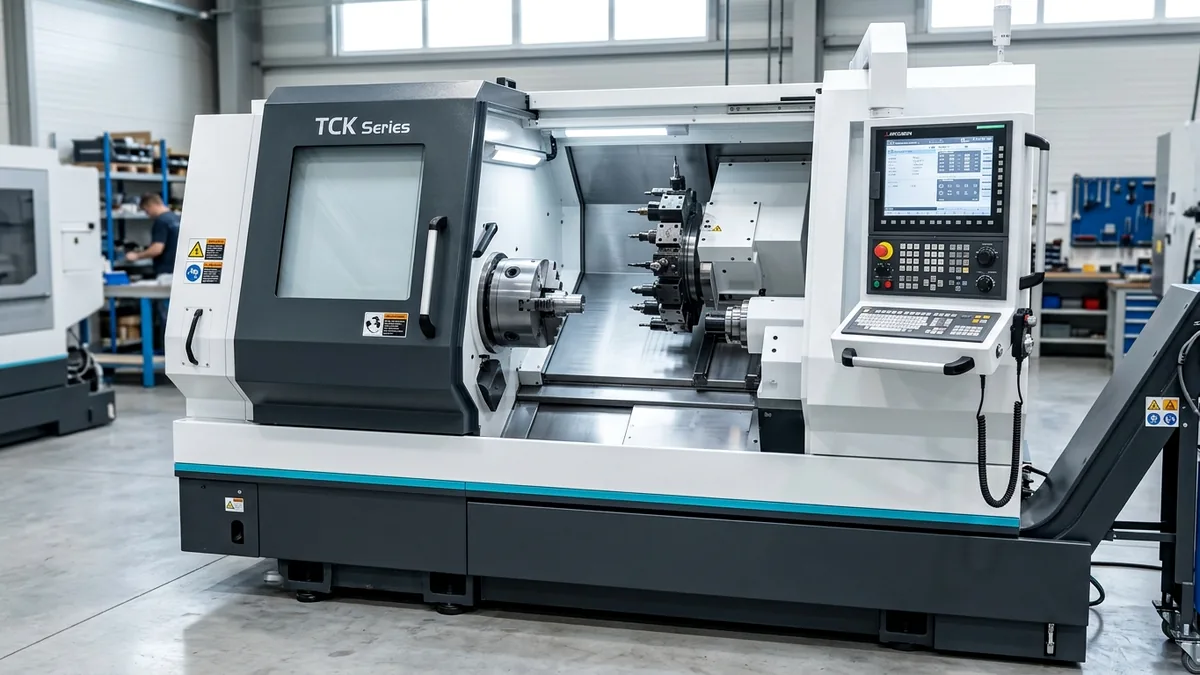
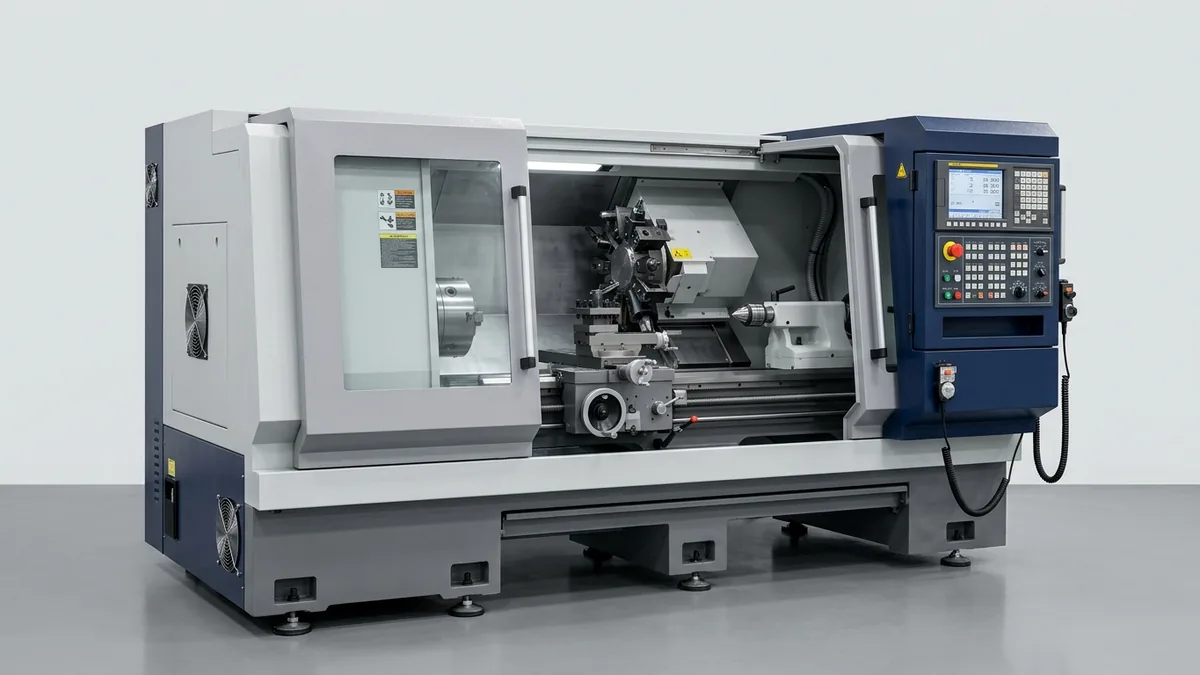
When equipping a modern machining facility, one of the most critical capital expenditure decisions is choosing between a Slant Bed CNC Turning Center (such as DAHAN TCK50/TCK52) and a Flat Bed CNC Lathe (such as DAHAN CK6140/CK6150).
While both configurations perform cylindrical turning, facing, grooving, and threading, their underlying kinematic architectures are engineered for fundamentally different manufacturing philosophies.
1. Ergonomics & Gravitational Chip Evacuation #
The defining feature of a slant bed lathe is the inclined casting plane—typically 30° or 45°.
- The Slant Bed Advantage (TCK Series): Gravity works for you. As high-speed turning generates massive volumes of hot, stringy chips under high coolant flow, the chips fall straight down into the integrated chain conveyor beneath the spindle. They never accumulate on the guideways or wrap around the chuck.
- The Flat Bed Reality (CK Series): On a flat bed lathe, chips fall onto the horizontal carriage ways. While telescopic stainless covers protect the precision screws and ways, operators must periodically clear chip nests during high-volume production.
2. Thermal Stability and Cutting Thrust Absorption #
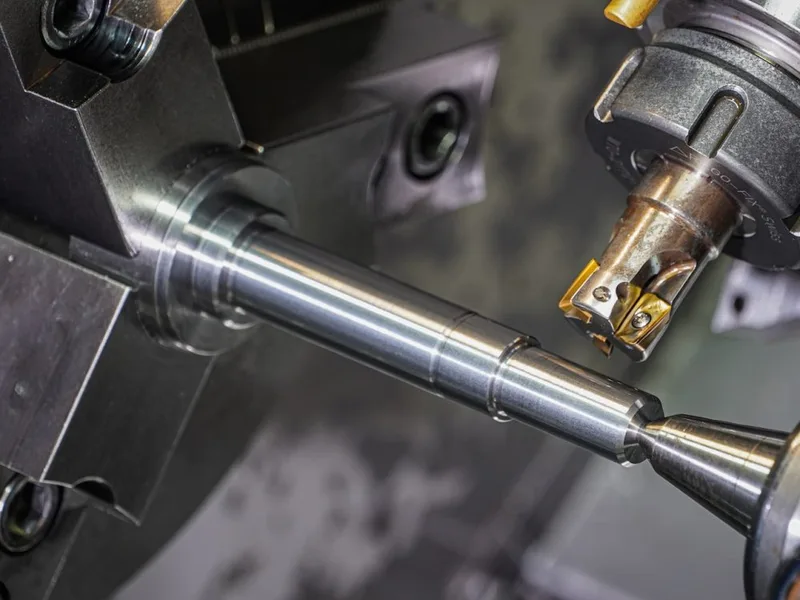
During aggressive roughing, cutting forces push the cutting tool backward:
- In Slant Bed Lathes (TCK52/56): The cutting thrust acts in direct alignment with the angled Meehanite base casting. The reaction forces transfer directly down into the machine foundation, resulting in virtually zero carriage lift or micro-chatter.
- Thermal Dissipation: Hot chips carry heat away from the workpiece into the conveyor basin rather than heating up the carriage structure, keeping thermal growth under 0.005 mm across multi-shift runs.
3. Turret Indexing Speed vs Toolpost Simplicity #
- Slant Bed Servo Turrets (TCK Series): Bi-directional hydraulic or servo turrets index tool-to-tool in 0.2 to 0.5 seconds with Hirth coupling repeatability. If your batch size is 500+ parts, shaving 4 seconds per tool change translates to thousands of dollars saved annually.
- Flat Bed Electric Toolposts (CK Series): Vertical 4-station electric turrets take 1.5 to 2.5 seconds to index. However, they allow simple manual tool setting and accommodate standard square shanks without expensive dedicated toolholders.
4. Investment Decision Matrix #
| Evaluation Criteria | Slant Bed (TCK Series) | Flat Bed (CK Series) |
|---|---|---|
| Ideal Batch Volume | Medium to High Volume (100–100,000 pcs) | Small Batch, R&D & Repair (1–100 pcs) |
| Max Spindle Speed | Up to 4,500 RPM | Up to 1,600–2,500 RPM |
| Long Shaft Capacity | Excellent (Programmable tailstock) | Superior (Lengths up to 3,000 mm on CK6160) |
| Initial Investment | Higher (Production-grade turning center) | Economical (High ROI for job shops) |
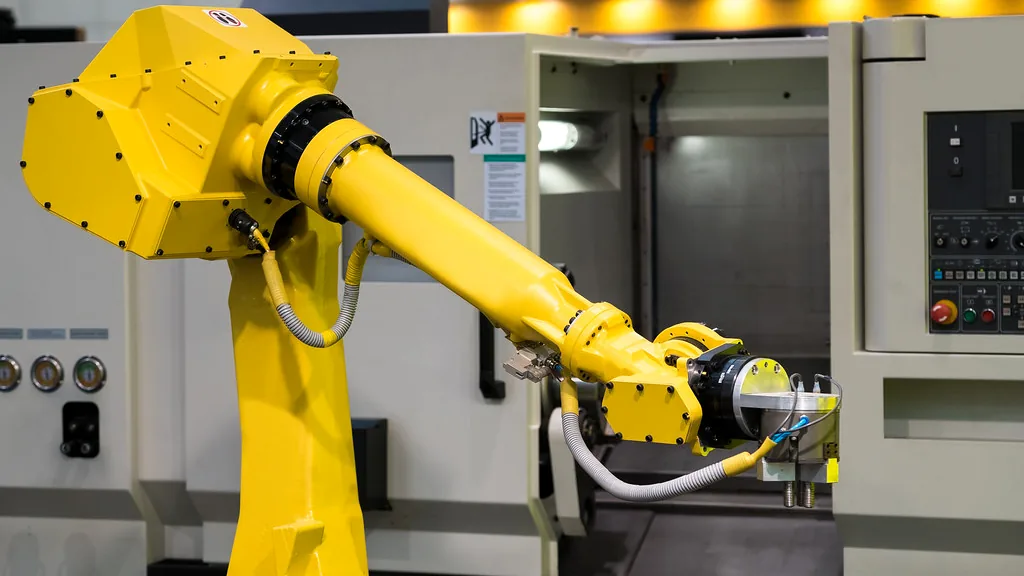
| Automation Compatibility | Bar feeder, parts catcher, robotic loading | Manual loading / semi-automated |
Looking for personalized machine sizing? Email DAHAN CNC at xiuc32860@gmail.com for technical application consultation.